
Ultherapy is a non-invasive treatment that uses micro-focused ultrasound to send energy deep beneath the skin and stimulate new collagen. Unlike a surgical facelift, it needs very little downtime, and most people go back to their normal routine the same day.
That said, "no downtime" does not mean "nothing is happening". Your skin spends the following weeks and months quietly rebuilding. How quickly you recover, and how your results look, depends on your age, your skin quality, the area treated and the energy level used. This guide walks through what is normal at each stage, how to look after your skin, and when to call your doctor.
What happens in the first hours after Ultherapy?
The ultrasound energy reaches the deeper support layers of the face, including the SMAS layer and the deep dermis. This starts a mild inflammatory response, which is the first step of healing and the signal your body uses to begin remodelling collagen and elastin.
These effects are common and expected within the first few hours:
- Mild redness: a pink flush caused by warmth in the skin. It usually starts to fade within hours.
- Mild swelling: a result of increased blood flow and lymphatic activity in the treated area.
- Sensitivity to touch: washing your face or removing makeup may feel slightly uncomfortable.
- Tingling: some people notice this because nerve endings in the deeper tissue are temporarily stimulated.
- A tight or stretched feeling: this is linked to the collagen tightening response and is often the first hint of the lifting effect.
Will it hurt afterwards?
Most people describe the afterglow as mild: a feeling of pressure or tenderness rather than sharp pain, typically around 1 to 3 out of 10. It tends to be strongest in the first 24 hours and then settles quickly. Occasionally, mild tenderness lasts 2 to 3 days.
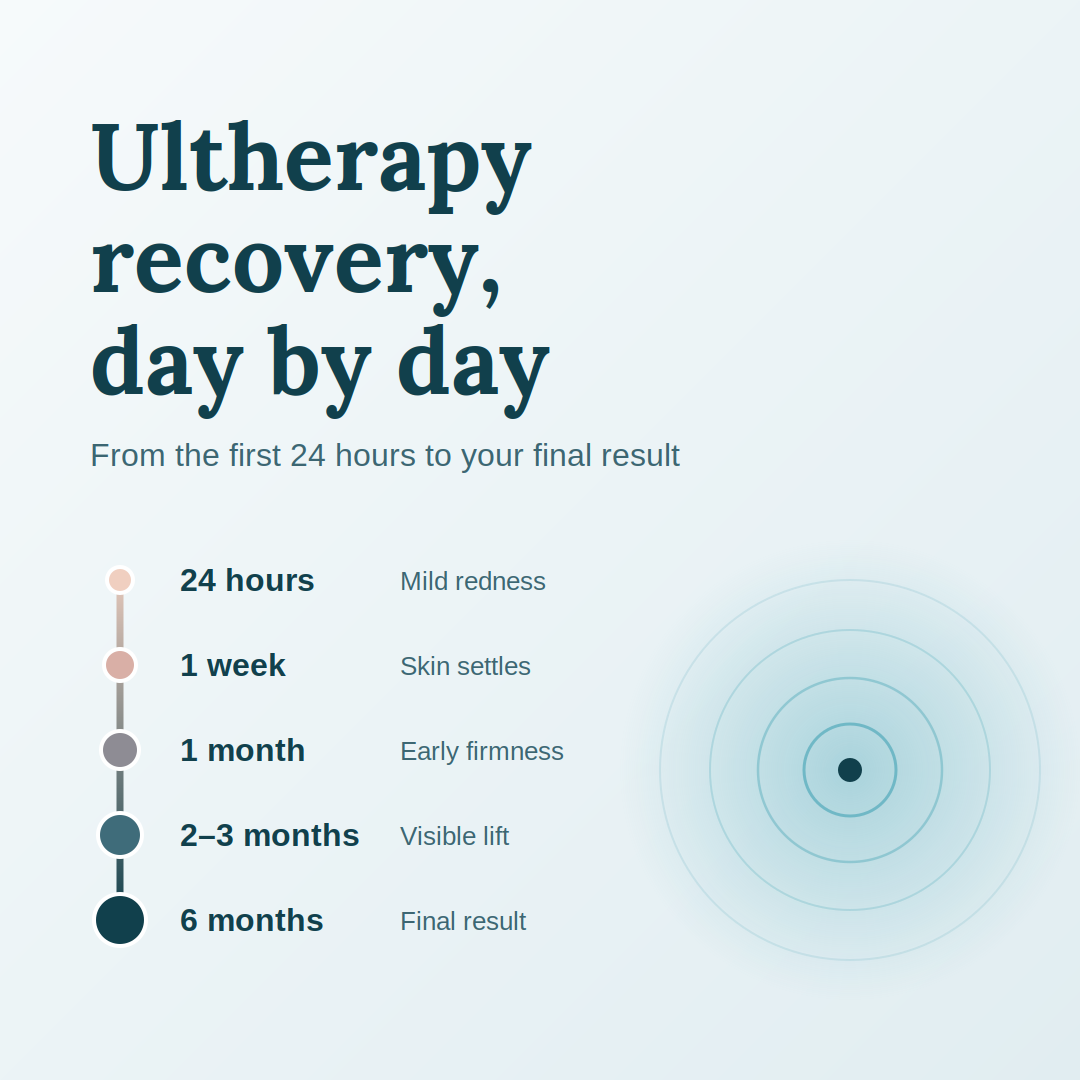
Ultherapy recovery timeline
The first 24 hours
Redness and mild swelling are most noticeable now, and your skin barrier is more sensitive than usual. You can usually resume your day. Cleanse gently, drink plenty of water, protect your skin from the sun, and avoid scrubbing.
The first week
Redness and swelling should be gone by the end of the week, and sensitivity to touch eases. Behind the scenes, fibroblast cells begin producing new collagen. You may notice a light sense of tightness.
The first month
Many people notice early changes within 2 to 4 weeks: skin that feels firmer and smoother, with a fresher look and subtle definition along the facial contours. Fine lines on the décolletage may soften slightly. These are interim results, and there is more to come.
Months 2 to 3
This is often the most exciting stage. Collagen production speeds up and elastin continues to remodel. The jawline looks more defined, skin elasticity improves, sagging under the chin and neck reduces, and skin texture looks smoother.
Around 6 months
Collagen production reaches its peak and the lifting effect is at its most pronounced. This is the best time to compare your before and after photos and judge your final result.
Temporary side effects and how long they last
Because Ultherapy is non-invasive, side effects are usually mild and short-lived. Everyone's skin is different, though, so some people notice them a little more.
What to do after Ultherapy
Be gentle with your skin. Wait 24 hours before your first wash, then use lukewarm water and a mild, fragrance-free cleanser. Pat dry with a soft towel instead of rubbing.
Drink enough water. Good hydration supports your skin barrier and helps reduce swelling. Around 2 to 2.5 litres a day is a sensible target for most people.
Protect your skin from the sun. Your skin is more sensitive for a while, and UV exposure can work against new collagen. Use an SPF 30 or higher every day, even when it is cloudy, and reapply every 2 to 3 hours when outdoors. Mineral filters (zinc oxide or titanium dioxide) are a good choice for sensitive skin.
Moisturise twice a day. Choose fragrance-free, alcohol-free products. Ingredients such as hyaluronic acid, ceramides and panthenol help repair the skin barrier.
What to avoid
- Very hot showers for the first 48 hours, as heat can increase redness.
- Saunas and steam rooms for the first week.
- Intense exercise for the first 3 to 4 days. Light activity such as walking is fine from about 24 hours.
- Alcohol for the first few days, as it can worsen swelling.
- Harsh scrubbing, massage and peels during the first week.
- Retinol and exfoliating acids (glycolic, salicylic and similar) for the first week. Restart gradually, at a low strength, once your skin is fully back to normal.
Makeup
Skip makeup on day one. After 24 hours, light mineral makeup or a BB cream is a good choice. Remove it gently with a cleansing milk or oil rather than wipes that need rubbing.
Extra tips for sensitive skin
If your skin is easily irritated, stay with products you already know and tolerate, and avoid trying anything new. If unexpected redness or itching appears, stop the product and speak to your doctor.
When will you see results?
Collagen formation is gradual, so results build over time instead of appearing overnight.
- 2 to 4 weeks: early firmness and a fresher look.
- 2 to 3 months: clearer lifting and better elasticity.
- 3 to 6 months: maximum results as collagen remodelling completes.
- 12 to 24 months: typical length of results. Ageing continues naturally, so many people choose a repeat session, often after 12 to 18 months. Younger patients may wait longer, and those with more laxity may repeat sooner.
The gradual pace is also why Ultherapy tends to look natural.
What affects your recovery and results?
- Age: collagen-producing cells are generally more active in younger skin, so results may appear faster. Skin over 50 can still respond well, and more visible sagging can make the lift easier to notice.
- Skin quality: healthy, hydrated, elastic skin tends to respond better. Significant sun damage can slow visible change.
- Treatment area: the face usually recovers quickly. The neck is thinner and more sensitive, so tenderness can last a little longer. The décolletage needs especially careful sun protection.
- Energy level: higher energy can stimulate collagen more strongly but may mean redness or sensitivity lasts a little longer. Your doctor adjusts this to your skin.
- Lifestyle: smoking, a poor diet, too little sleep and heavy sun exposure can all slow healing. Protein, vitamin C, vitamin E and zinc in your diet, together with regular sleep, support collagen production.
When should you contact your doctor?
Mild symptoms are normal, but get medical advice if you notice:
- Severe pain that does not ease, including with pain relief
- Swelling that keeps increasing or changes the shape of your face
- Numbness that lasts longer than a week
- Signs of infection: increasing warmth, spreading redness, pus or fever (seek help promptly)
- Blisters, severe itching or a rash
Frequently asked questions
Can I go back to work the same day? Usually yes. If you have mild redness, mineral makeup can cover it. If you have an important event, you may prefer to wait 24 to 48 hours.
When can I exercise? Light activity like walking is fine after about 24 hours. Return to intense workouts after 3 to 4 days. Wait until your skin has fully settled before swimming.
When can I wash my face? After 24 hours, using lukewarm water and a gentle cleanser.
How long does swelling last? Usually 24 to 72 hours. It rarely lasts up to a week.
When does redness go away? It starts to fade within hours and has usually gone within 24 hours. In sensitive skin, it can last up to 48 hours.
Why is my skin sensitive afterwards? The energy reaches deep tissue and triggers a mild healing response. Your skin barrier is temporarily more reactive, and this normally passes within days.
Can Ultherapy be repeated? Yes. Timing depends on your skin and your goals, and your doctor can advise you on this.